Used Cooking Oil Collections: Build a Traceable Route from Kitchen to Receiver
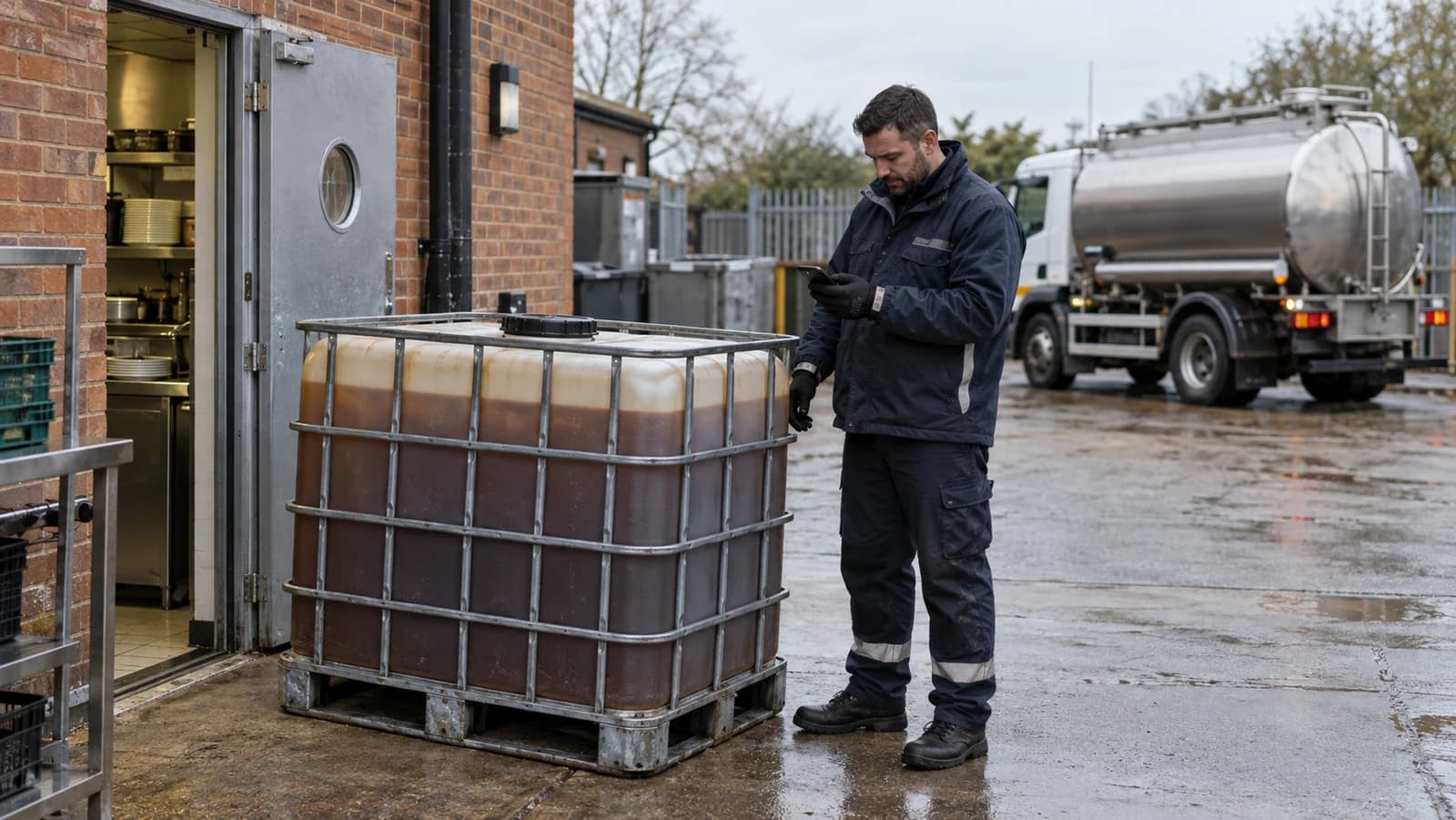
Used cooking oil collection combines two jobs that spreadsheets handle badly. It is a recurring service route, with restaurant access windows and variable yields, and it is a material movement that needs a clear trail from the producer to an authorised receiver. If quantity, container, transfer and payment records live in separate files, small discrepancies become difficult to explain.
Strong used cooking oil collection records start at the customer profile and continue through the lift, vehicle load, transfer documentation and receiving-site record. This article describes an operational model for UK collectors. It does not classify a particular oil, determine tax treatment or replace environmental, transport, food-chain or health-and-safety advice.
Define exactly what you collect
“Waste oil” is not one waste stream. Used edible oil from a restaurant kitchen is different from engine oil, hydraulic oil, interceptor waste and an unknown mixture. Keep the service scope and acceptance rules explicit.
The government's biodiesel quality protocol identifies 20 01 25, edible oil and fat, for waste cooking oil from restaurants, caterers and kitchens. It also lists different example codes for wastes from certain food-manufacturing and processing activities. A familiar code should not be applied without checking the source, process and composition under the relevant waste-classification guidance.
For each customer, record:
- the producing business and collection address;
- the type and source of oil accepted;
- materials that must not be mixed into it;
- container type, count, ownership and capacity;
- usual quantity and collection frequency;
- safe collection point and access window;
- how quantity will be measured or estimated;
- rejection and contamination procedure;
- commercial rate or purchase arrangement; and
- the approved onward destination or load allocation.
If the source or material changes—for example, the customer starts adding fats or a second process stream—review the classification and destination acceptance rather than silently treating it as the old service.
The used cooking oil collection software page shows how recurring routes, transfer documents and commercial records can be organised around the same job.
Build a movement-level record at every lift
A collector needs enough detail to trace material without making the driver complete a long form in a busy service yard. A concise lift record can include:
- customer, site and collection-point reference;
- date and time;
- driver and vehicle;
- source container and replacement-container identifiers, if used;
- measured weight or volume and the measurement method;
- waste description and code;
- contamination, water or foreign-material observation;
- quantity rejected or left on site;
- photograph or customer acknowledgement where required and proportionate;
- WTN or season-ticket reference; and
- vehicle tank, compartment, batch or receiving-load reference.
Be clear about units. Do not compare litres recorded at the customer with kilograms at the receiver as though they were the same measure. If the business converts between volume and mass, document the method, assumptions and circumstances in which the conversion is valid.
Container IDs are particularly useful where a clean drum or IBC is exchanged for a full one. The record should show what left, what stayed and any damage or seal issue. That reduces arguments over lost containers and helps the depot plan how many empties each route needs.
Plan demand before sequencing postcodes
UCO yield varies with covers served, menu, fryer use, season and events. A fixed fortnightly round may be appropriate, but its planned quantity should be based on recent collections rather than nominal container size.
Maintain three values per site:
- normal quantity per lift;
- expected range or peak factor; and
- days until overflow risk.
Use the values to decide service frequency and route capacity. A simple forecast is:
planned vehicle quantity = sum of expected site quantities + agreed contingency
The contingency should cover ordinary variation, not allow the vehicle to exceed any safe or legal limit. Vehicle tank, compartment, load-security and transport arrangements need their own competent assessment.
Group customers geographically, then anchor the route around hard service windows and high-volume sites. Allow time for pumping or decanting, container exchange, access delays, paperwork, spills or rejected material. Include the authorised receiving point and unloading time in the route rather than treating the depot return as an afterthought.
PaperRoute's waste route-planning feature can manage recurring work, sequence stops and give the office route progress. The operator remains responsible for vehicle suitability, tank compatibility, safe transfer procedures and the acceptance rules for each load.
Separate service exceptions from material exceptions
The office needs to know whether a failed lift was caused by access or by the oil itself.
Service exceptions might include:
- site closed or locked;
- collection point obstructed;
- container missing;
- customer cancelled;
- no safe stopping position; or
- vehicle or transfer-equipment fault.
Material exceptions might include:
- visible water or food solids outside specification;
- suspected mineral oil or chemical contamination;
- wrong material in the container;
- damaged or leaking container;
- unexpected fat or mixed stream; or
- quantity materially different from the booking.
Give drivers a stop-work and escalation route for unknown or unsafe material. Record observations without asking a driver to make a technical classification beyond their training. Suspect material should not be blended into a routine load simply to finish the round.
Connect the lift to the correct transfer documentation
Used cooking oil managed as non-hazardous business waste remains subject to duty-of-care controls. GOV.UK's waste transfer note guidance states that each load of non-hazardous waste moved off premises needs a WTN or another document carrying the same required information. The parties keep copies for two years.
For stable recurring transfers, a season ticket can run for up to a year when the current holder, carrier and waste type stay the same. A movement schedule must still record the individual date, time, quantity and site details required by the guidance. A route sheet that says only “12 collections complete” is not a useful substitute.
Use PaperRoute's free WTN generator for a single non-hazardous transfer, or review the digital WTN workflow if transfer notes need to stay attached to recurring jobs. Users remain responsible for the correct code, description, parties, signatures and process.
The government's waste duty of care code also requires checks that the next holder is authorised and that the description is accurate enough for safe handling. Keep evidence of carrier registration and receiving-site authorisation current rather than relying on a check made years ago.
Reconcile route quantity with receiving-site quantity
At the end of a route or load, compare:
- total quantity recorded across customer lifts;
- opening and closing vehicle or tank readings, where available;
- rejected, spilled or otherwise exceptional quantity;
- depot transfer or bulking record; and
- receiving-site weight or volume.
The figures may not match exactly because measurement methods, residual oil, temperature and units can differ. The objective is not to force a false match; it is to identify and explain material variance.
Give each discrepancy an owner and reason. Repeated variance at one site may indicate a measurement problem. Route-wide variance may indicate a calibration, unit-conversion or data-entry issue. An unexplained adjustment made only when an invoice is raised weakens the audit trail.
Keep purchase and self-bill records tied to the lift
Some collectors pay a supplier for suitable used cooking oil. Where the parties use self-billing, the commercial record should reference the underlying customer, date, accepted quantity, quality adjustment and agreed rate. That allows the supplier statement, route record, transfer record and downstream receipt to be reconciled.
Self-billing has tax and agreement requirements separate from waste duty of care. Our self-bill invoicing guide for waste collectors covers the operational and HMRC-facing considerations in more detail. Obtain accounting advice for your arrangement rather than assuming a waste transfer note is also a valid purchase invoice.
PaperRoute supports self-bill purchase invoicing and accounting integration for configured collection workflows. It does not determine whether a supplier, material or transaction qualifies for a particular tax treatment.
Treat storage and spill controls as part of route capacity
If oil is stored at a collection depot, the route plan must not deliver more than the site can lawfully and safely receive. GOV.UK's business oil-storage guidance says the rules cover waste vegetable and waste cooking oil and generally apply to business containers of 201 litres or more in the circumstances described there. Requirements and regulators vary across the UK, and permits or other controls may also apply.
Confirm secondary containment, drainage protection, inspection, transfer and emergency procedures with competent advisers. Drivers should know how to report a leaking customer container or spill and who can authorise recovery. Do not improvise disposal into drains or ordinary trade waste.
Prepare for digital waste tracking without confusing the phases
Current GOV.UK provider guidance starts mandatory receiving-site reporting on 1 October 2026 in England and Wales and 1 January 2027 in Scotland and Northern Ireland. The service roadmap plans collectors, carriers, brokers and dealers for October 2027.
Those later dates do not delay today's WTN and duty-of-care obligations. A collector that already records source, time, parties, code, description, quantity and destination in structured fields will be better placed to adapt, but should keep checking official guidance as service details develop.
A weekly operating review
Review a short set of measures:
- planned versus collected quantity;
- vehicle capacity used and unplanned depot returns;
- collections per productive hour;
- service-window and access failures;
- rejected or contaminated quantity;
- missing transfer or receiving-site references;
- customer-to-receiver quantity variance;
- container losses and damage; and
- commercial adjustments not linked to a collection reason.
Our practical route planning software guide explains how to use recurring-route data without over-optimising a driver's day.
The best UCO operation creates one continuous story: this customer produced this material; this registered carrier collected this quantity; it travelled in this load; the authorised receiver accepted it; and the commercial record used the same accepted quantity. When that chain is built into the route workflow, the business can investigate discrepancies quickly instead of trying to recreate them at month end.