Waste Collection Software for Rural Areas UK: The Complete Guide for Dispersed Routes
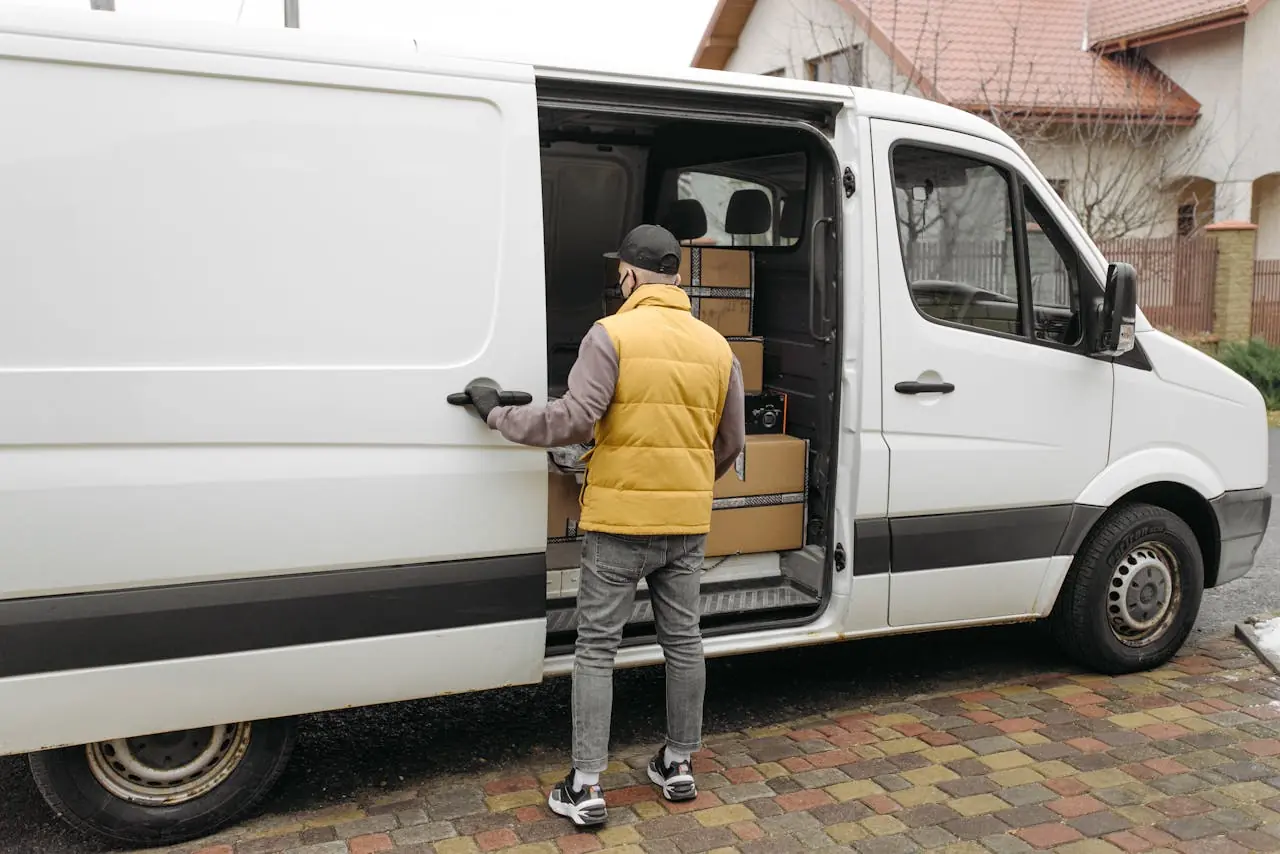
If you're running waste collections across rural communities in the UK, you already know the challenges: 50-mile round trips for five stops, mobile signal that drops the moment you leave the A-road, and fuel costs that can kill your margin on commercial contracts.
Most waste collection software is built for urban operators—dense routes, reliable 4G, and customers within a two-mile radius. That doesn't work when you're covering Devon villages, Scottish Highlands estates, or Welsh valley farms.
This guide explains what makes waste collection software for rural areas UK fundamentally different from urban-focused platforms, and what features actually matter when your drivers spend more time between jobs than at them.
Why Rural Waste Collection Is a Different Business Model
Rural waste operators face three structural challenges that urban competitors don't:
1. Distance costs dominate the economics
When you're driving 15 miles between a farm and a recycling centre, fuel and vehicle time become your biggest variable costs. A poorly planned route can add 40 miles to a day—that's £30+ in diesel alone before you factor driver hours.
Urban operators optimise for number of stops per hour. Rural operators optimise for miles per stop. The software needs to reflect that.
2. Mobile signal is unreliable or non-existent
Try generating a digital Waste Transfer Note on a hill farm in Northumberland with no signal. If your software requires constant cloud connectivity, your driver is stuck—either waiting for signal or filling out paper forms, which defeats the entire point of going digital.
3. Customer density is low, contract value is high
You might have 30 regular customers spread across 200 square miles. Each one matters. Missed collections, late invoices, or compliance gaps hit harder when you can't absorb the loss across volume.
This means your software needs to handle complexities that don't exist in a city route: multiple waste streams per stop (agricultural, commercial, domestic), variable collection frequencies, and customers who expect you to remember their specific access requirements ("gate code is 1234, park by the barn, don't use the main drive").
What Makes Waste Collection Software Rural-Ready
Not all platforms are built for dispersed operations. Here's what separates rural-capable software from urban-only tools:
Offline-First Functionality
This is non-negotiable. Your driver app must work without mobile signal—not just "cache the last screen" offline, but full functionality: job completion, photo capture, weight recording, and digital WTN generation.
When your driver finishes a job at a remote site, they need to generate the Waste Transfer Note immediately, get the customer signature, and move to the next stop. Waiting until they're back in signal range (which could be 20 miles away) creates compliance risk and slows the whole day down.
PaperRoute's driver app is built offline-first—16 database tables are cached locally, so your drivers can complete every step of a job without connectivity. When signal returns, everything syncs automatically.
Fuel-Efficient Route Optimisation
Urban route planning prioritises stop density. Rural route planning prioritises total mileage reduction.
The algorithm needs to account for:
- Real road distances, not straight-line calculations (a 3-mile crow-flies distance can be 9 miles via actual roads in rural areas)
- Vehicle restrictions (narrow lanes, weight limits on rural bridges, low clearance)
- Time windows (farm collections often need to happen before 10am or after 3pm to avoid livestock movement)
- Depot return logistics (if you're 40 miles from the tip, you need to batch jobs to minimise return trips)
A good system doesn't just tell you the order of stops—it shows you why that order saves fuel, and lets you override it when local knowledge (road closures, seasonal flooding) requires manual adjustment.
GPS Tracking That Works in Poor Signal
Standard GPS tracking assumes continuous connectivity. That breaks down in rural areas where signal is patchy.
Your software needs to log GPS coordinates locally and batch-upload them when connectivity returns. This keeps your vehicle tracking data intact without draining the driver's phone battery trying to maintain a constant connection.
This also matters for compliance. If an Environment Agency audit asks where a specific load was collected and disposed of, you need GPS evidence—even if the collection happened in a signal blackspot.
Proof of Service for Dispersed Customers
When you're collecting from a remote industrial estate or a farm, you can't rely on the customer being present to sign paperwork. Your system needs to capture:
- Photo evidence (before/after shots of the waste, vehicle on-site)
- GPS timestamp (proving you were at the location)
- Digital signature capture (when the customer is available)
- Notes fields (for access issues, contamination observations, or customer instructions)
All of this needs to work offline and attach to the job record automatically.
How Digital Waste Tracking Works in Rural Operations
Digital Waste Tracking is phased by role. Permitted and licensed receiving sites in England and Wales have had mandatory receipt reporting since 1 October 2026; rural waste collectors and carriers have mandatory collector reporting planned for October 2027.
For rural operators, this creates a specific challenge: completing and retaining the appropriate WTN information in locations with no internet access.
Here's what you need:
1. Offline WTN generation
Your driver needs to complete the WTN on-site: waste description, EWC codes, quantity, customer details and disposal destination. The app should store that information locally, sync it to the back office when connectivity returns and preserve it for the submission workflow that applies to your role.
2. Pre-loaded customer and waste stream data
Typing out "Mixed commercial waste (EWC 20 03 01)" on a phone screen at a windy farm gate is inefficient and error-prone. Your software should pre-load customer sites, their typical waste streams, and corresponding EWC codes—so the driver just selects from a list.
3. Consistent duty-of-care record fields
The WTN must include the information that applies to the transfer, such as carrier details, the parties involved and an accurate waste description. Auto-filling configured fields can reduce transcription errors and speed up the process, but the operator must still check the record.
4. Customer signature without connectivity
Where your WTN process requires a customer signature, the app should capture it and attach it to the record even offline. When the driver regains signal, the signed WTN can sync to the back-office system for review and export.
The Hidden Cost of Cloud-Only Systems in Rural Areas
Many modern waste platforms are "cloud-only"—they require constant internet connectivity to function. This works fine in cities. It fails in rural environments.
Here's what happens when your software can't work offline:
- Drivers use paper as a backup, which means you're maintaining two systems (digital and manual) and reconciling them at the end of each day
- Jobs can't be closed out on-site, so your office staff spend hours updating records manually
- Invoices are delayed because the data isn't in the system until the driver returns to the depot
- Compliance gaps open up because the digital WTN wasn't generated when the waste was transferred
You end up paying for software that solves urban problems while still doing rural work the old way.
Route Planning for Long-Distance Collections
Urban operators think in "collections per hour". Rural operators think in "miles per collection".
Effective waste collection software for rural areas UK needs to optimise for:
Multi-Stop Route Efficiency
If you're collecting from five farms spread across 60 miles, the sequence matters. A badly planned route can add 20 unnecessary miles. Over a week, that's 100 miles—nearly £100 in wasted fuel.
Your software should calculate the most fuel-efficient sequence automatically, accounting for:
- Collection time windows (farms with restricted access hours)
- Disposal point locations (batching jobs to minimise tip runs)
- Vehicle capacity (ensuring you're not doubling back because you filled up too early)
Depot and Disposal Point Logistics
In rural operations, your depot might be 30 miles from your disposal site, and both might be 20 miles from your collection area. You're not looping back every two hours like an urban operator.
Your route planning needs to account for this triangulation:
- Outbound leg: Depot → first collection
- Collection loop: Optimised sequence of customer stops
- Disposal leg: Last collection → tip
- Return leg: Tip → depot
If your software treats the depot as the start and end point for every route (urban assumption), it'll calculate inefficient paths.
Seasonal and Weather Variables
Rural routes are affected by conditions that don't exist in towns:
- Flooded lanes in winter
- Harvest season traffic (tractors blocking narrow roads)
- Livestock movement times (farms often restrict vehicle access during milking or feeding)
Your system needs to let you flag routes or stops with seasonal notes, and allow manual overrides when local knowledge beats the algorithm.
Invoicing and Accounting for Rural Waste Operators
Rural operators often work on contract-based pricing rather than per-collection rates. You might have:
- Monthly retainers for estate management companies
- Seasonal contracts for agricultural waste (silage wrap, fertiliser bags)
- Ad-hoc collections for construction projects in remote areas
Your software needs to handle:
Self-bill invoicing for local authority contracts (common in rural areas where the council outsources to small operators)
Variable pricing structures (per tonne, per lift, monthly retainer, or hybrid models)
Integration with accounting systems like Sage Cloud or Xero, so you're not manually entering every invoice
PaperRoute integrates directly with Sage Cloud and Xero, eliminating double-entry and keeping your financial records synced automatically—critical when you're managing 30 dispersed customers with different billing cycles.
What to Look for When Evaluating Rural Waste Software
If you're comparing platforms, here's the shortlist of questions to ask:
- Does the driver app work fully offline? (Not "view-only offline"—full job completion, WTN generation, signature capture)
- Does route optimisation account for real road distances and vehicle restrictions? (Not just straight-line calculations)
- Can GPS tracking log coordinates offline and batch-upload later? (Essential for poor signal areas)
- Are customer records, waste streams, and EWC codes pre-loaded for offline access? (Speeds up on-site data entry)
- Does it integrate with your accounting software? (Sage Cloud, Xero, QuickBooks—eliminates double-entry)
- Can the Android and iOS app create structured digital WTNs without connectivity? (Important before the collector and carrier phase planned for October 2027)
- Is pricing transparent? (Rural operators have tighter margins—you need to know the cost upfront, not after a sales call)
Making the Switch Without Disrupting Operations
Moving from paper-based systems (or urban-focused software that doesn't fit your operations) to a rural-capable platform doesn't have to halt your business.
Here's the practical path:
Week 1: Data migration Export your existing customer list, waste streams, and pricing structures. Most platforms (including PaperRoute) will import this via CSV or integrate directly with your current accounting system.
Week 2: Driver training Your drivers need 30 minutes with the app to understand offline job completion and digital WTN generation. Test it on one vehicle first before rolling out fleet-wide.
Week 3: Parallel running Run the new system alongside your existing process for one week. Drivers complete jobs digitally, but you still generate paper WTNs as backup. This reveals any workflow gaps without risking compliance.
Week 4: Full transition Switch off the paper system. By this point, your drivers are confident, your office team can track jobs in real-time, and your invoicing is automated.
Rural operations don't need complexity—they need reliability. The software must work in the conditions you actually operate in, not idealised urban environments.
If your current system requires paper workarounds whenever signal drops, it is not built for rural waste collection. Use the time before the collector and carrier phase planned for October 2027 to fix that, whether you manage seasonal agricultural waste contracts or commercial collections across dispersed sites.
Current Digital Waste Tracking context
Guidance reviewed on 9 October 2026. Phase 1 is already mandatory for in-scope permitted and licensed receiving sites in England and Wales. Receiving sites in Scotland and Northern Ireland follow on 1 January 2027. Mandatory collector use is planned for October 2027. Required WTNs and other existing documents continue alongside receiving-site reporting. Check the official rollout timetable and receiving-site guidance for the roles, scope and requirements that apply.