Road Sweepings, Waste Codes and WTNs: A Records Guide for Contractors
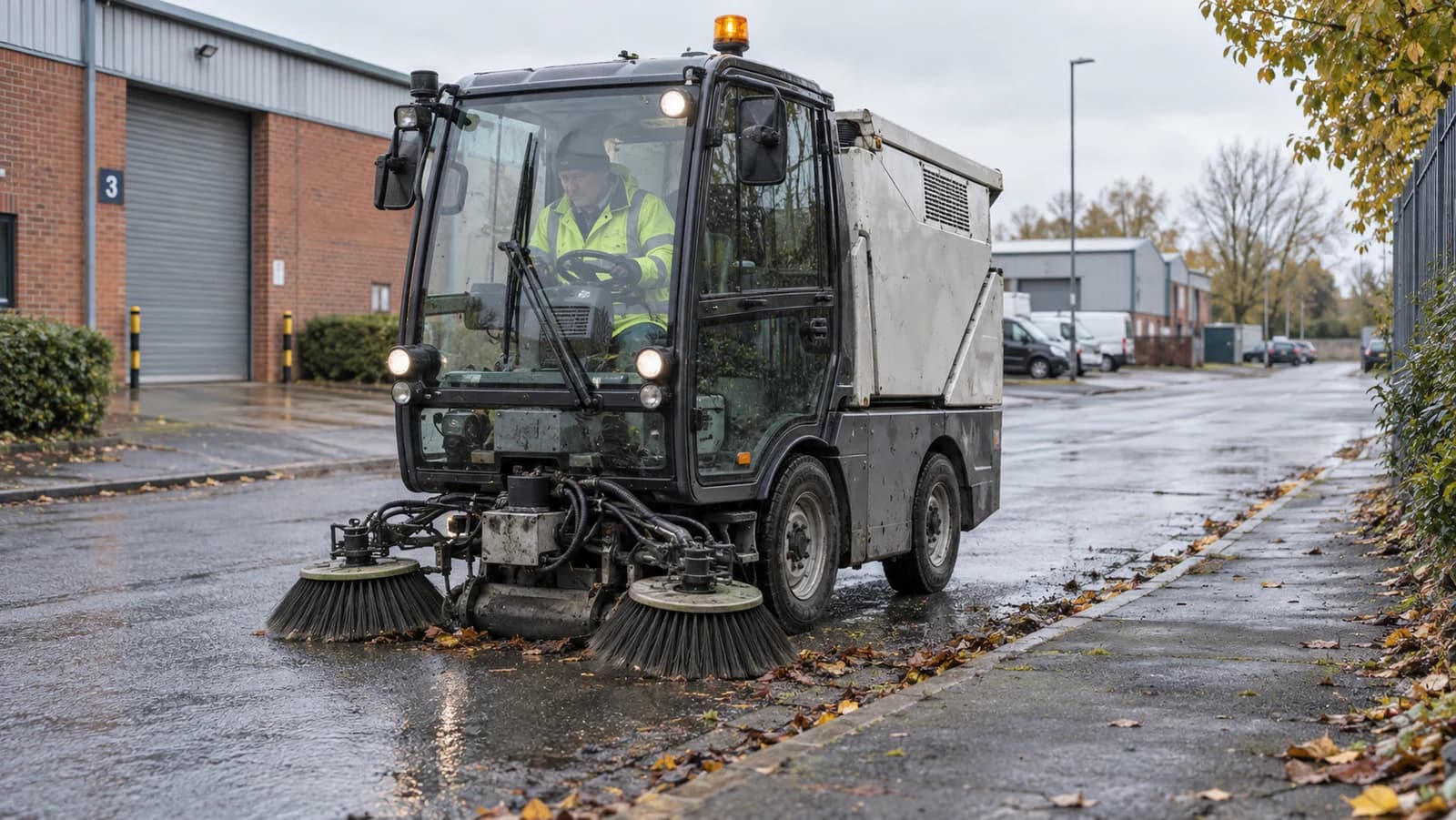
A road sweeper can pick up grit, leaves, broken glass, litter, tyre particles, silt and traces of oil in a single pass. On a construction site, a similar-looking load may consist mainly of soil and aggregate. After a spill, the hopper may contain a substance that changes the waste's risk and classification completely.
That variability is why a road sweepings waste code should never be selected from the vehicle name alone. The code and description need to reflect where the material arose, the process that produced it and what is actually in the load.
This guide explains a records workflow. It does not classify a load; holders should use regulator guidance, evidence and competent advice where necessary.
Start with origin and composition, not a favourite code
The List of Waste is organised partly by the activity that produced the waste. Two sweepers doing mechanically identical work can therefore generate waste under different chapters.
Code 20 03 03, street-cleaning residues, is commonly associated with routine cleaning of public highways, town centres and similar municipal areas. It is not a universal code for everything found in a sweeper hopper.
The Environment Agency's RPS 65 on sweeping waste distinguishes routine street-cleansing material from sweepings produced at construction and demolition sites. The guidance notes that construction-site material may instead fall under codes such as 17 05 04 or 17 09 04 when the relevant non-hazardous descriptions fit. Those examples are not permission to choose a code without assessment.
Ask these questions before assigning a code:
- Where exactly did the waste arise?
- What activity or process generated it?
- Was this routine sweeping, construction work, a spill response or another activity?
- What materials are normally present?
- Is there evidence of oil, chemicals, contaminated soil or another unusual substance?
- Has the load been kept separate from other wastes?
- Does the intended receiving site accept that code and description under its authorisation?
The official WM3 waste-classification guidance sets out the assessment process used in England, Scotland and Wales. Northern Ireland has its own version. WM3 should be followed when identifying the appropriate code and assessing hazardous properties; a short blog checklist cannot replace it.
When 20 03 03 may be a reasonable starting point
For routine street cleansing, the source and process may support 20 03 03. A useful written description should still say more than "road sweepings". Depending on the load, it might identify the material as wet street-cleansing residues containing grit, silt, leaves and litter from named public-highway rounds.
That description helps the next holder understand the load and distinguish it from:
- gully waste or liquid sludge managed under different arrangements;
- construction-site soil and stones;
- mixed construction and demolition waste;
- a separately collected spill or contaminated material; and
- material produced by treatment at a waste facility.
Do not assume that because a receiving facility accepts 20 03 03, every load should be made to fit it. The classification comes from the waste, not from the most convenient line on a permit.
Contamination changes the question
Routine street sweepings are variable and can contain pollutants. A visible sheen, chemical container, unusual odour, known diesel spill or sweepings from contaminated industrial land should trigger the operator's escalation procedure.
That does not mean every road-sweeping load is hazardous. It means the available evidence must be considered rather than ignored. Depending on source and composition, sampling, analysis or specialist classification advice may be required. Keep suspect material segregated and do not send it to a facility that is not authorised and willing to accept it.
Build a simple escalation path for drivers and supervisors:
- stop and avoid combining the material with a routine load where safe to do so;
- record the precise source and circumstances;
- photograph the material if this can be done safely;
- notify the designated competent person;
- obtain further information from the client or incident controller;
- assess and classify before transfer; and
- confirm the destination's authorisation and acceptance criteria.
The waste duty of care code requires holders to prevent harmful or unauthorised management, check the next holder is authorised and provide an accurate written description on transfer. "The tip always takes it" is not a classification method.
Who is the waste producer?
Do not set this field by habit. The producer is the person whose activity produced the waste, and the answer can depend on the contract and facts. The contractor operating the sweeper, the organisation commissioning the work and the occupier of a site may each hold responsibilities at different points.
Agree roles before work starts. The contract record should identify:
- who provides the initial waste description and classification;
- who checks for changes or exceptional contamination;
- who acts as carrier, broker or dealer;
- who chooses and approves the receiving facility;
- who completes and signs transfer documentation; and
- who retains each part of the audit trail.
Contract wording does not remove a waste holder's statutory duties. If practice differs from the contract, resolve it rather than copying an old producer name onto the next note.
What the waste transfer record needs to achieve
For each transfer of non-hazardous business waste, the government's waste transfer note guidance says there must be a WTN or another document containing the same required information. Both businesses complete and sign the relevant parts and retain a paper or electronic copy for two years.
A sound road-sweepings transfer record should capture, as applicable:
- the waste holder and person receiving it;
- carrier details and registration information;
- date, time and place of transfer;
- an accurate waste description;
- the classification code;
- quantity and physical form;
- the relevant Standard Industrial Classification code;
- the parties' signatures or valid electronic approvals; and
- a reference joining the transfer to the source round, vehicle and destination receipt.
Use the free WTN generator for an individual non-hazardous transfer, or read how digital Waste Transfer Notes can be connected to completed collection jobs. The tool helps structure a document; the people making the transfer remain responsible for accurate information and the correct legal process.
When a season ticket can work
Regular movements may be covered by a season ticket for up to one year, but only when the relevant details remain the same. GOV.UK identifies the current waste holder, carrier and waste type as details that must remain unchanged. If the transfer sites vary, they can be handled in the season-ticket arrangements, with a separate schedule recording each movement.
For sweeping work, a schedule should provide a usable movement-level trail, including:
- date and time;
- source location or route reference;
- quantity;
- vehicle or load reference;
- receiving site; and
- any exception that changed the waste description or classification.
A season ticket is not a blanket for contaminated or materially different loads. When the waste, holder or carrier no longer matches, create the appropriate new documentation.
Our digital WTN guide explains the information flow in more detail, while the waste carrier compliance checklist covers authorisation and record-retention habits.
Join the route, transfer and receipt records
The strongest audit trail follows the material through four stages:
- Source record: contract, site, road section, date and sweeping activity.
- Load record: vehicle, operative, composition observations, quantity and exceptions.
- Transfer record: holders, carrier, code, description, time and approvals.
- Receipt record: facility, weighbridge quantity, accepted code, date and any rejection or adjustment.
Give the chain a shared reference. This makes it possible to answer questions such as "Which roads produced this load?", "Why was the code changed?" and "Where was the material accepted?" without searching several paper folders.
PaperRoute's road-sweeping sector page shows how route and job records can support this traceability. Software can prevent blank fields and keep documents together, but it cannot inspect a hopper or override the receiving site's permit.
Storage and dewatering need their own controls
If sweeping waste is stored or allowed to dewater at a depot, check whether an environmental permit, exemption or regulatory position applies. RPS 65 currently allows certain storing and bulking by the waste producer in England only when every condition is met. Its conditions include secure storage, an impermeable surface with sealed drainage, quantity and time limits, controls for separated liquid and records.
The RPS also states that dewatering alone does not change the waste classification code because it does not change the waste's characteristics. Do not copy its conditions selectively or assume it applies outside England. Regulatory position statements can be amended or withdrawn, so check the current version before relying on one.
Prepare records for the digital-waste-tracking phases
The UK service is being introduced in stages. Current GOV.UK provider guidance starts mandatory receiving-site reporting on 1 October 2026 in England and Wales and 1 January 2027 in Scotland and Northern Ireland. The service roadmap plans collectors, carriers, brokers and dealers for October 2027.
These dates do not remove today's transfer-note and duty-of-care requirements. They make structured, consistent source, code, quantity and party data more valuable. Operators should check the latest provider requirements and deadlines for the nation and role that applies to them.
A final check before a sweeper load moves
Before transfer, confirm:
- The source and producing activity are known.
- The load has not been coded merely because it came from a sweeper.
- Composition and any exceptional contamination have been considered.
- The description tells the next holder what the waste actually is.
- The carrier and receiving site hold the necessary authorisations.
- The destination has agreed to accept that code and material.
- The WTN or season-ticket schedule is complete and accurate.
- Source, load, transfer and receipt records share a reference.
- Copies will be retained for the required period.
- Any storage or dewatering activity has a valid legal basis.
The defensible approach is simple: classify from evidence, describe the load accurately and keep the movement joined to its source. Code 20 03 03 may be correct for routine street-cleaning residues, but it should be a reasoned conclusion—not an automatic default on every road-sweeper job.