Road Sweeper Route Planning: From Scheduled Streets to Proof of Service
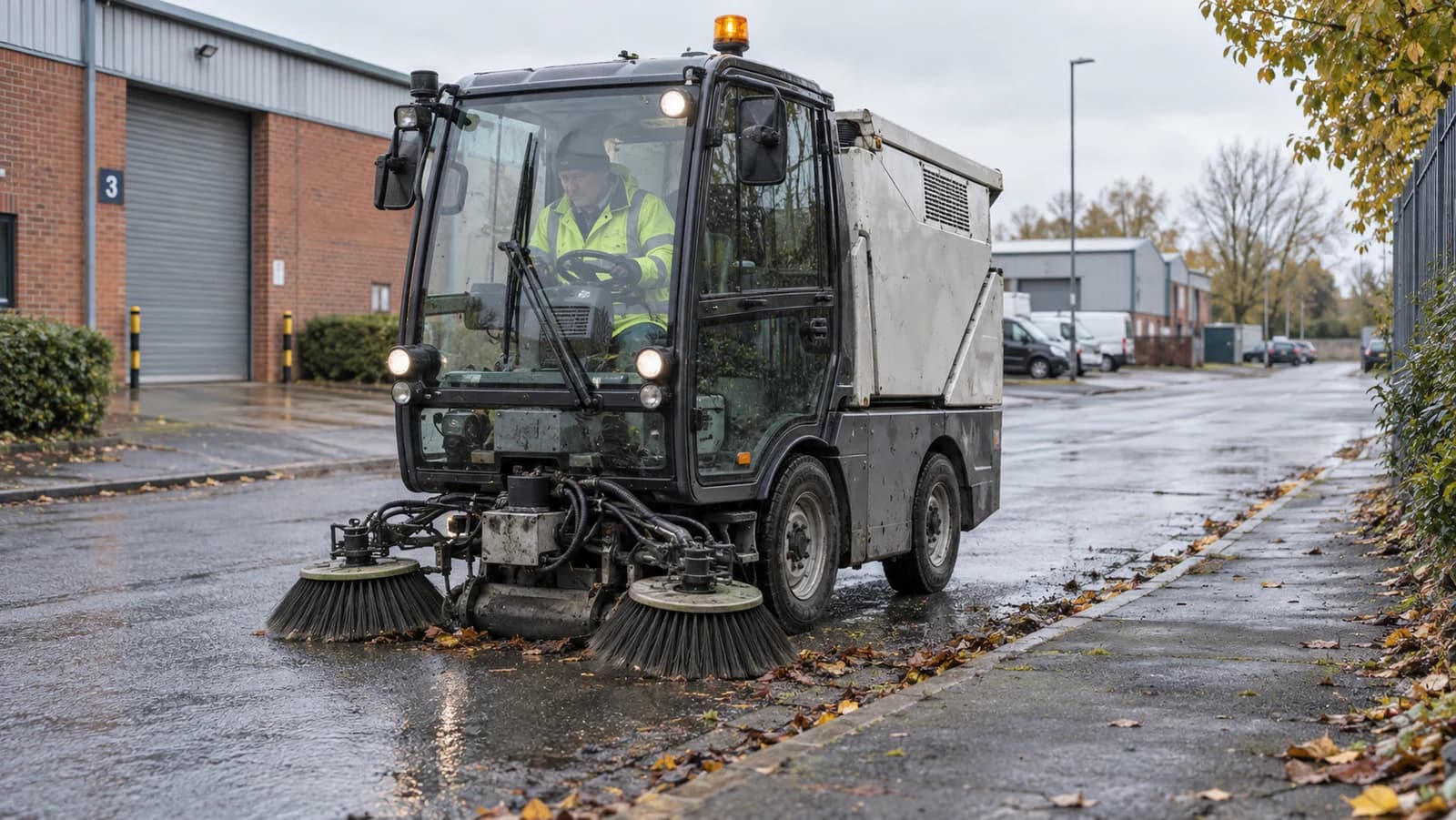
Road-sweeping work looks simple on a map: assign a vehicle to an area, draw a line around the streets and send the crew out. The operational reality is harder. A sweeper may need to cover both sides of a road in different directions, avoid a school gate at opening time, refill with water, unload during the shift and return to a missed section after parked cars have moved.
That is why effective road sweeper route planning needs two connected outputs. The first is a practical plan the driver can complete safely and efficiently. The second is a reliable record of what actually happened. A coloured line on a planning screen is not, by itself, proof that the contracted service was delivered.
This article sets out a workable method for planning rounds and producing useful proof of service. It is operational guidance, not advice on a particular highway contract or a substitute for your own safety, environmental and legal assessments.
Why a sweeping round is not a delivery route
A parcel route is built around stops. A sweeping route is often built around road segments, passes and tasks. That difference changes the information a planner needs.
For each section, establish:
- the exact road, estate, car park or yard to be swept;
- whether the requirement covers one side, both sides, channels, gullies or a defined area;
- the planned frequency and any permitted service window;
- access restrictions, gates, height limits and safe turning points;
- known parked-car pressure, market days, school times or loading activity;
- the expected amount and type of material;
- the vehicle and attachment suitable for the surface;
- water, fuel, emptying and disposal requirements; and
- what the contract treats as completed, partially completed or inaccessible.
Store those details against the service location, not in a planner's memory or an old email thread. A new driver should be able to understand the job without phoning the office for the unwritten rules.
PaperRoute's road-sweeping software page explains how recurring rounds, driver records and job evidence can sit together for sweeping contractors. The underlying planning discipline still matters whichever system you use.
Build a serviceable route before trying to optimise it
The shortest theoretical route can be a poor working route. Start with feasibility, then reduce unnecessary travel.
1. Define the unit of service
Decide what one planned item represents: a whole street, a directional pass, a named car park, a section between two junctions or a customer site. Use units that a driver can complete and report clearly.
If a two-mile road requires separate northbound and southbound passes, representing it as one vague stop makes exceptions difficult to record. Two explicit tasks make it possible to show that one side was completed and the other was obstructed.
2. Add time windows and access rules
Separate hard constraints from preferences. A locked industrial estate that only opens at 07:00 is a hard constraint. Sweeping a retail street before shops open may be a strong preference unless the contract specifies it.
Record the reason for each restriction. That helps planners make sensible changes when an urgent job arrives instead of moving work into an impossible slot.
3. Plan productive time, not just driving time
Estimate the whole shift:
shift time = travel + sweeping + setup + water/fuel + unloading + breaks + contingency
Sweeping speed varies with the surface, material, pedestrians, parked vehicles and the standard required. Use actual completion history to improve estimates rather than applying one speed to every road.
4. Treat unloading as part of the route
Material does not disappear when it enters the hopper. The plan needs a lawful, available destination and enough time to travel there, queue, unload and return. The closest facility is not useful if it cannot accept the waste or is closed when the vehicle arrives.
The Environment Agency's current RPS 65 guidance on storing and bulking sweeping waste describes sweepings as a variable mix that can include grit, litter, glass, leaves and tyre crumb. It also makes clear that storage and dewatering controls matter. RPS 65 applies in England and only when all its conditions are met; operators elsewhere should check the rules with their regulator.
5. Sequence compatible work
Once the route is feasible, group work that shares geography, service windows, vehicle needs and disposal arrangements. Avoid crossing a town repeatedly simply because jobs were entered in customer-name order.
The site's waste collection route-planning feature supports recurring schedules, truck-aware navigation and route resequencing. For a sweeping operation, the planner should still review the result against directional passes, local restrictions and the crew's safe system of work.
Design an exception process before the first shift
Missed work is sometimes unavoidable. Parked vehicles, emergency road closures, unsafe conditions, locked gates and equipment faults can all prevent completion. The commercial problem begins when the office cannot distinguish a justified exception from an unnoticed omission.
Use a short, consistent list of reason codes, for example:
- access blocked by parked vehicles;
- road or site closed;
- unsafe to proceed;
- customer denied access;
- vehicle or equipment fault;
- hopper capacity or disposal delay;
- weather restriction; and
- work completed only in part.
Require a brief note and, where safe and appropriate, a photograph. An exception should create a decision: return later, reschedule, notify the client, raise a variation or close the item under the contract rules. It should not disappear into a WhatsApp conversation.
What useful proof of service contains
Proof of service should answer a client's reasonable questions without forcing someone to reconstruct the day from several systems.
A practical service record can include:
- contract, customer and service-location reference;
- planned task and scheduled window;
- vehicle and operative assigned;
- actual arrival, start and completion times;
- completed segments or passes;
- GPS trail or location record, where lawfully and proportionately used;
- time-stamped before-and-after photographs where they add evidence;
- exception reason, note and affected section;
- supervisor review or customer acknowledgement if the contract requires it; and
- the related load, transfer or disposal reference where waste left the operator's control.
Not every contract needs every field. Collect evidence that is useful, proportionate and covered by your privacy and workforce policies. GPS data can support a service record, but it does not prove the required cleaning standard on its own. Photographs can show condition, but a close-up without a location or job reference may be difficult to rely on.
PaperRoute's offline driver app can retain the day's route, capture job-linked photographs and record GPS while the device has no signal, then sync when connectivity returns. That makes it easier to keep the operational record attached to the job rather than scattered across phones. It does not decide whether a road meets your client's specification; that judgement remains with the operator and contract owner.
For a broader explanation of planning recurring waste rounds, see our waste collection route-planning article. Our guide to GPS tracking in waste collection covers the difference between vehicle visibility and a complete operational record.
Keep proof of service separate from waste transfer records
There is overlap, but the documents answer different questions.
- A service record shows what sweeping work was attempted or completed.
- A waste transfer record describes a transfer of waste between holders.
- A weighbridge or disposal receipt records what a receiving facility accepted.
One should not be used as a loose substitute for another. The government's waste duty of care code requires an accurate description when waste is transferred and checks on the next holder's authorisation. Link the records with a shared job or load reference so an audit trail can move from street, to vehicle, to transfer, to receiving site.
Review the round with measures that lead to action
Total miles and total hours matter, but they do not reveal why performance changed. Review a small operational set each week:
- planned tasks versus fully completed tasks;
- partially completed and missed tasks by reason;
- productive sweeping time versus travel and waiting time;
- repeated access failures by location and time;
- unplanned unloading or depot returns;
- estimated versus actual task duration;
- client queries that could not be answered from the record; and
- repeat work caused by an unclear instruction or poor evidence.
Look for patterns rather than blaming a single driver or planner. If the same high street is obstructed every Friday at 10:00, change its service window. If one route regularly needs an extra unload, reduce its planned workload or change the disposal sequence. If photographs repeatedly fail to identify the location, change the evidence checklist.
A pre-departure checklist for sweeping routes
Before releasing a route, confirm:
- Every task has a clear location, extent and completion standard.
- Directional passes and repeat sections are explicit.
- The assigned vehicle is suitable for the roads and work.
- Access and time-window constraints are visible to the driver.
- Refill, unloading and authorised destination arrangements are included.
- The shift has realistic contingency time.
- The driver knows how to record partial completion and exceptions.
- Required evidence is defined and proportionate.
- Office staff know which exceptions require same-day client contact.
- Service, waste transfer and receiving-site records can be joined by a reference.
Good road sweeper route planning is not about squeezing the greatest possible number of lines into a shift. It is about producing a round a crew can complete, recovering quickly when conditions change and leaving a record that stands up to a client review. When the plan and the evidence use the same job structure, the office spends less time chasing explanations and more time improving the next round.